[ad_1]
Q: Do you ever worry you might be pricing your house out of the neighborhood? There are so many things I’d love to do to our quaint little house, but then I worry, “Don’t do it—you’ll spend too much and never recoup the cost.” It feels too small to stay in forever. For example, does a full kitchen renovation make sense if we might move into a bigger home in a year or two? Or should we just bite the bullet and spend the money so we can enjoy our home now? Sorry for rambling—I have a love/hate relationship with our house. Some days I want to stay and improve it; other days I’m browsing listings for something bigger. —Molly
A: Great question, Molly. We live in a modest 1,350-square-foot home and plan to stay long-term, even if our family grows. How much space feels “big enough” varies widely from person to person. I used to live in Manhattan in a tiny room, so our current house feels like a palace by comparison. That experience helps me keep perspective: many families thrive in much smaller spaces than people expect.
When you’re worried about over-improving a house relative to the neighborhood, the common advice is to buy the worst house on a great block rather than the best house in a less desirable area. A fixer in a strong neighborhood usually gains more value with thoughtful upgrades, while an expensive renovation in a weaker area can leave you with a house that’s out of step with nearby properties.
We deliberately bought a house with room for improvement. Every neighboring property had a well-kept front lawn, while ours had an overgrown mulch bed and a thicket at the curb—an obvious opportunity to add value. Buying below the neighborhood average price gave us a clearer sense of how much we could invest without regretting it. In our case the purchase price was roughly $35K less than comparable homes nearby, which made upgrades easier to justify.
If your house already appears nicer than surrounding homes, you should be cautious about major renovations—especially costly projects like a full kitchen remodel. In that situation it’s smart to consult a real estate professional about local comps and what improvements are likely to pay off. A realtor can advise whether a pricey renovation will boost resale value or simply overshoot the neighborhood standard.
Our perspective, though, is a bit different because we consider our home to be our “forever house.” We focus less on short-term resale value and more on living well in the space. That influences the decisions we make: we’re willing to reconfigure rooms or prioritize comfort over strict return-on-investment calculations. If you plan to sell in a year or two, however, that short timeline changes things. In a sluggish market, major investments become riskier, while low-cost updates are often safer and more effective.
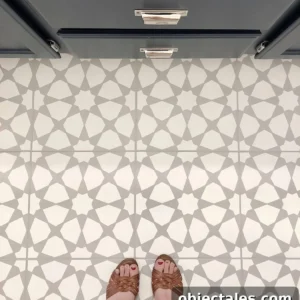
The practical verdict: prioritize inexpensive, impactful upgrades. Swap dated light fixtures for modern, energy-efficient ones. Install a programmable thermostat. Refresh a bathroom vanity or paint the existing one. Replace old cabinet hardware or update doorknobs from brass to chrome or nickel. Small changes like these improve appearance and function without a huge price tag.
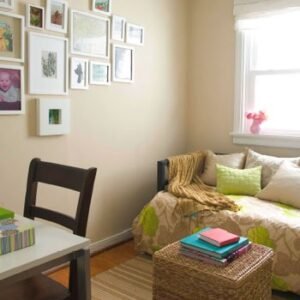
And of course the quickest, most dramatic refresh is paint. We transformed a dark, dated den by simply rolling on a light, creamy color. We painted over paneling and painted brick walls; the room instantly felt brighter and cohesive. The whole project took about seven hours and under $100 worth of paint. That proves you don’t need to spend a fortune to fall in love with your home again.
Small, thoughtful updates can make a temporary home feel more permanent without risking your financial future. Paint, hardware swaps, lighting, and easy mechanical upgrades tend to deliver the best balance of cost and appeal. If you’re leaning toward a larger renovation like a kitchen remodel, weigh neighborhood comparables, your timeline for selling, and whether you’ll truly enjoy the upgrade while you’re still living there.
Do you have other budget-friendly renovation wins that made a temporary house feel like a forever home? Or have you ever hated a home only to later fall in love and stay for years? Share your stories—practical tips and personal experiences are always helpful.
Update – Want to know where we got something in our house or what paint colors we used? Click the Shop Our House button on our site to find details.

[ad_2]