If you still think the best way to become rich in Minecraft is mining diamonds for hours, you are playing the hard way.
The smartest players get rich through villager trading.
A well-built villager setup can give you:
-
endless emerald income
-
enchanted books
-
diamond gear
-
powerful tools
-
golden carrots
-
maps
-
decorative blocks
-
and a much easier survival experience overall
In other words, villagers are not just useful. They are one of the most overpowered systems in Minecraft survival.
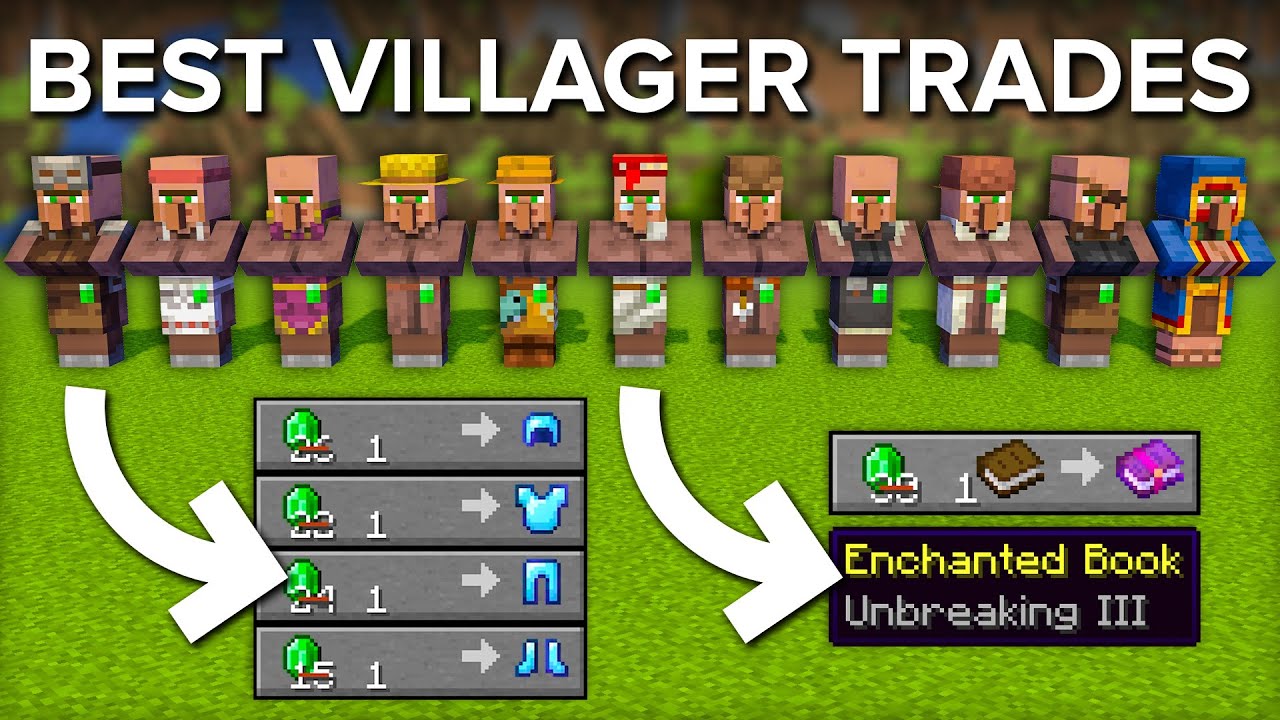
Minecraft’s own official content continues to emphasize villager professions and the value they offer, from easy emeralds to enchanted books, food, tools, and armor. Mojang’s “Villager jobs ranked” article highlights how different professions can help with emerald generation, enchantments, and equipment, while their villager overview explains that villagers trade equipment, maps, and food in exchange for emeralds.
And in modern Minecraft, villager trading is still extremely relevant in 2026. Mojang’s Java Edition 26.1 notes even include fresh villager trade changes, such as deterministic trade generation behavior and changes to Master Librarian trades, which shows that villager trading remains an actively maintained progression system.
This guide is written in a beginner-friendly but detailed way. It will show you:
-
how villager trading actually works
-
which villagers make you rich fastest
-
how to create an efficient trading loop
-
which “secret” strategies matter most
-
how to avoid wasting time on bad professions
-
how to turn a small village into an emerald machine
Let’s get into the real reason villagers are so powerful.

Why Villager Trading Is So Broken in Survival 💡
The reason villager trading feels overpowered is simple:
You are not just buying items.
You are converting renewable resources into high-value progression.
For example:
-
sticks can become emeralds
-
crops can become emeralds
-
pumpkins can become emeralds
-
melons can become emeralds
-
basic materials can turn into enchanted gear
-
those enchanted items can save you huge amounts of mining time
That is why villager trading is so different from normal looting. A normal chest gives you a one-time reward. A villager can become a long-term money printer.
Minecraft’s official villager content and current profession explainers consistently show that professions like farmers, librarians, armorers, toolsmiths, clerics, and fletchers provide some of the most useful progression trades in the game.
Tip: The biggest villager secret is this: the richest Minecraft players do not chase rare loot first. They build systems that make rare loot feel unnecessary.

How Villager Trading Works in Simple Terms 🧠
Before getting rich with villagers, you need to understand the core mechanics.
Villagers have professions
A villager’s job determines what they trade. Official Minecraft and current explainers list professions such as librarian, farmer, armorer, toolsmith, weaponsmith, cartographer, cleric, fletcher, fisherman, shepherd, mason, butcher, and leatherworker, while nitwits do not provide useful job-based trades.
Job site blocks assign professions
Minecraft’s official villager content explains that villager professions are tied to job site blocks, such as:
-
lectern for librarian
-
composter for farmer
-
blast furnace for armorer
-
smithing table for toolsmith
-
grindstone for weaponsmith
Trading levels up villagers
Villagers unlock better trades as you trade with them. Mojang explicitly notes the satisfaction of leveling up villagers and building more efficient villages around professions and work blocks.
Villagers restock
Villagers are not unlimited vending machines every second. They need access to their workstation to restock trades, and Minecraft’s villager/job block guidance points to villagers returning to their job site blocks daily to work.
Pro Tip: Most “villager trading is annoying” problems come from poor setup, not bad mechanics. If villagers can reach their workstations cleanly, the system feels dramatically better.
Best Villager Professions for Getting Rich Fast 💰
Not all villagers are equal. Some are nice. Some are niche. Some are absolutely game-changing.
Here is the truth: if your goal is wealth and progression, only a few professions really matter at the top level.

1) Farmer — The Best Early Emerald Machine 🌾
If you are just starting a trading setup, the farmer is often the easiest villager to profit from.
Current profession guides list farmer trades involving bread, apples, pies, cakes, golden carrots, glistering melon slices, and crop-based exchanges, and this aligns with the long-standing role of farmers as one of the best renewable-resource trading professions.
Why farmers are amazing
They let you turn renewable crops into emeralds.
That means:
-
easy income
-
fast scaling
-
simple automation later
-
very beginner-friendly setup
Best farmer inputs
-
wheat
-
carrots
-
potatoes
-
pumpkins
-
melons
Even a small crop farm can generate a lot of trading value over time.
| Why Farmer Is Great | Result |
|---|---|
| Renewable resources | steady emerald flow |
| Easy to scale | more farmland = more profit |
| Beginner-friendly | no advanced system needed |
| Supports food economy | rich and fed at the same time |
Tip: A farmer is often the first villager that makes your world feel economically stable.

2) Fletcher — One of the Easiest Emerald Farms in the Game 🪵🏹
If you want one of the simplest money tricks in Minecraft, the fletcher is elite.
Current villager job guides list fletcher trades around arrows, flint, bows, and crossbows, and the profession is widely valued because stick-related trading can create a very cheap early emerald route.
Why fletchers are secretly overpowered
Because wood is easy to get.
And if your version and trade roll give you a favorable stick trade, you can turn large amounts of basic wood into emeralds quickly. That is one of the easiest “poor to rich” transitions in early survival.
Why players love this
-
trees are everywhere
-
no dangerous mining required
-
easy early-game money
-
perfect if you have lots of forest nearby
Pro Tip: If your world has easy wood access, fletchers can turn boring tree chopping into one of the fastest starter emerald strategies.
3) Librarian — The True Endgame Villager 📚✨
If the farmer makes you stable, the librarian makes you powerful.
Minecraft’s own villager ranking article specifically calls out the villager value of powerful enchantments, and current guides still position librarians as one of the most important professions because they offer enchanted books and utility items like lanterns, clocks, compasses, and name tags.
Why librarians matter so much
Because they let you buy progress.
Instead of hoping enchantments appear randomly, you can work toward a reliable enchantment economy.
Why they are considered top tier
-
enchanted books
-
long-term gear optimization
-
easier maxed-out tools
-
powerful survival scaling
-
better control over upgrades
Important 2026 note on librarians
Mojang’s Java Edition 26.1 notes say that villager profession trades now use deterministic random sequences and that Master Librarians no longer offer Name Tags, with red and yellow candles added instead. That means villager trade pools are still evolving, and specific expectations around some librarian outcomes can change over time.
Also, Mojang’s feedback/community discussions around proposed villager trading changes show how central librarians remain to the enchantment economy, especially around Mending debates. While those feedback posts are not official final mechanics, they confirm just how important librarian balance remains to players.
Warning: Do not build your whole librarian strategy around outdated assumptions from older versions. Villager trade details can shift, so check version-specific expectations when hunting very specific books.

4) Armorer, Toolsmith, and Weaponsmith — The Gear Shortcut Trio ⚒️🛡️⚔️
These three professions are some of the best “skip the grind” villagers in the game.
Current villager job references list:
-
Armorer for iron and diamond armor, plus shield-related utility
-
Toolsmith for stone, iron, and diamond tools
-
Weaponsmith for iron and diamond weapons
Why they are so strong
They let you reduce:
-
mining pressure
-
gear RNG frustration
-
the pain of rebuilding after death
-
the amount of diamond gear progression you need to do manually
Best use case
These villagers shine once your emerald economy is already rolling. First, earn emeralds through farmers/fletchers. Then spend those emeralds on gear upgrades through smith-type villagers.
That is the core “rich player” villager loop.
| Profession | Best For |
|---|---|
| Armorer | armor progression |
| Toolsmith | pickaxes, axes, tools |
| Weaponsmith | swords and weapon upgrades |
Tip: The real villager economy is not “one villager makes you rich.” It is “one villager makes emeralds, another converts emeralds into power.”

5) Cleric — The Utility Villager People Underestimate 🔮
Clerics are not always the first villager beginners rush toward, but they can be extremely useful.
Current profession explainers list cleric trades involving redstone, lapis lazuli, ender pearls, and bottles o’ enchanting.
Why clerics matter
They help with:
-
brewing progression
-
enchanting support
-
end progression
-
useful utility resources
A strong villager setup is not just about emerald profit. It is also about reducing annoying resource bottlenecks. Clerics help do that.
Best Villagers Ranked for Riches in Survival 🏆
Here is the practical ranking for players who want to become wealthy fast.
| Rank | Villager | Best Strength |
|---|---|---|
| 1 | Farmer | easiest renewable emeralds |
| 2 | Fletcher | cheap early emerald generation |
| 3 | Librarian | enchanted-book power |
| 4 | Armorer | gear shortcut |
| 5 | Toolsmith | tool progression |
| 6 | Weaponsmith | combat progression |
| 7 | Cleric | utility and end-game support |
This ranking is not about flavor. It is about wealth + progression efficiency.

The Secret to Getting Rich: Build an Emerald Loop 🔁💚
Most players think villager trading means “occasionally trading when convenient.”
That mindset is too small.
The real secret is to build a loop.
The smart villager economy looks like this:
-
gather renewable materials
-
trade them for emeralds
-
use emeralds for high-value items
-
repeat
-
scale the system
Example loop
-
crop farm → farmer → emeralds
-
wood → fletcher → emeralds
-
emeralds → librarian books
-
emeralds → armorer/toolsmith gear
That is how you turn villagers from “useful NPCs” into an actual economy.
Pro Tip: Emeralds are not the final goal. They are the currency that buys time, safety, and progression.
How to Reset Villager Trades the Smart Way 🔄
One of the most important villager tricks is understanding profession assignment and trade locking.
Minecraft’s profession system ties villagers to job site blocks, and villagers can adopt jobs through those blocks when unemployed. Current guides explain that unemployed villagers can take professions from job site blocks, while nitwits do not.
The beginner version
If you have an unemployed villager and place a job block, the villager can take that profession. If you have not traded with that villager yet, changing the job block can change what they offer. Once you trade, the profession and trade path become locked in practice for that villager.
That is the classic trade-reroll strategy players use for villagers like librarians.
Smart reroll advice
-
only reroll unemployed, untraded villagers
-
do it in a controlled trading hall space
-
lock good trades immediately with one trade
-
avoid chaotic village environments while rerolling
Tip: This is why trading halls are so powerful. They turn villager randomness into something manageable.

Restocking: Why Your Villagers “Stop Working” Sometimes 🛠️
A very common beginner complaint is:
“Why won’t my villager trade anymore?”
Usually the answer is restocking.
Minecraft’s official villager/job site explanation says villagers visit their job blocks daily to perform work, and villager trading guides note that workstations, trade unlocking, and restocking are central parts of the system.
If a villager will not restock, check this:
-
Can they reach their workstation?
-
Is the workstation actually theirs?
-
Is the villager trapped in a weird way?
-
Is the trading hall too messy?
-
Did you accidentally break and replace blocks in a confusing order?
Clean restocking rule
One villager, one reachable workstation, one organized cell.
That simple structure fixes many problems.
Warning: A villager that looks visually close to a job block is not always “working correctly” in a messy setup. Clean pathing matters.
Hidden Money Strategy #1: Use Cheap Trades to Fund Expensive Trades 💸
This is one of the biggest “rich player” secrets in Minecraft.
Do not try to make every villager produce profit directly. Instead, let some villagers create money, and let other villagers convert that money into top-tier value.
Easy money villagers
-
farmer
-
fletcher
Value-conversion villagers
-
librarian
-
armorer
-
toolsmith
-
weaponsmith
-
cleric
That split is what makes a villager economy powerful.
| Villager Role | Example Jobs |
|---|---|
| Money generators | Farmer, Fletcher |
| Upgrade converters | Librarian, Armorer, Toolsmith |
| Utility support | Cleric, Cartographer |

Hidden Money Strategy #2: Golden Carrots Are Quietly Amazing 🥕✨
A lot of players talk about books and gear, but forget food economy.
Current job explainers note that farmers can offer useful food items such as golden carrots.
Golden carrots are one of the best foods in Minecraft for many players. If your villager economy can support strong food trades, you are not just getting rich—you are improving daily survival quality too.
That matters more than people think.
Hidden Money Strategy #3: Villager Riches Are Really About Time Savings ⏳
The richest player is not always the one with the most emeralds. It is often the one who no longer wastes time.
Villagers save time by reducing:
-
manual enchanting randomness
-
gear rebuilding stress
-
long exploration for certain items
-
farming certain rare resources
-
repeated low-value grind
That is why villagers feel so strong in long-term survival.
You are not just buying stuff.
You are buying efficiency.

Should You Build a Trading Hall? Yes—If You Want Real Wealth 🏛️
If you only trade casually in a random village, villagers are useful.
If you build a trading hall, villagers become incredible.
Current trading hall guides explain the value of structured halls for easy access and profession control, and current villager profession/job systems naturally reward organization.
Why a trading hall is worth it
-
controlled villager professions
-
easier rerolling
-
easy access to restocking
-
safer villager storage
-
faster shopping
-
cleaner emerald economy
-
easier expansion later
Signs you are ready for a trading hall
-
you already have 2+ strong villagers
-
you are tired of village chaos
-
you want specific enchantments
-
you are producing renewable resources
-
you plan to cure villagers later for discounts
Pro Tip: A breeder + trading hall combo is where villager trading goes from “nice feature” to “game-breaking economy.”

Best Early Trading Hall Order
If you are starting from scratch, use this villager order:
-
Farmer
-
Fletcher
-
Librarian
-
Armorer
-
Toolsmith
-
Weaponsmith
-
Cleric
Why this order?
Because it gives you:
-
income first
-
then enchantments
-
then gear
-
then utility
That is the cleanest beginner path.
Discounts: The Real Secret to OP Trading 🔥
One of the most powerful villager mechanics is discounts.
Current villager trading guides discuss discounts and reputation effects as important factors in the trading system.
Why discounts matter
If trade prices drop, your emerald economy becomes much more efficient. Over time, discounted villagers can make already-strong trades feel absurdly good.
What this means strategically
-
a good villager is strong
-
a discounted good villager is incredible
This is why many advanced players build their halls with future curing/discount systems in mind.
Tip: If you plan long-term, every villager cell should be built as if discounts might matter later.

Common Beginner Mistakes That Keep Players Poor ❌
1. Trading with random villagers only
A random village is fine at first, but it is not a strategy.
2. Ignoring farmers and fletchers
Players often chase fancy trades before building income.
3. Not locking good trades early
If you find something valuable, trade once and secure it.
4. Messy workstation placement
This breaks restocking and creates confusion.
5. Thinking only librarians matter
Librarians are amazing, but they are strongest inside a full emerald economy.
6. No breeder, no scaling
Without new villagers, your trading system grows slowly.
7. Wasting time instead of building loops
The goal is not “more villagers.” The goal is “better systems.”
Best Villager Trading Setup by Progress Stage
| Stage | Focus |
|---|---|
| Early Game | Farmer, Fletcher, basic income |
| Mid Game | Librarian, first enchanted books, better gear |
| Late Early / Mid | Armorer, Toolsmith, Weaponsmith |
| Expansion Phase | Breeder, Trading Hall, Cleric support |
| Advanced Phase | Discounts, optimized hall, targeted professions |
This keeps your villager economy efficient instead of chaotic.
Quick FAQ
What is the best villager for emeralds in Minecraft?
For many players, the farmer is one of the best and easiest emerald villagers because renewable crops are simple to scale. Fletchers are also extremely strong for easy starter income.
What is the best villager in Minecraft overall?
For pure progression value, the librarian is usually one of the strongest because enchanted books remain incredibly important. Minecraft’s own villager ranking article also emphasizes the power of enchantment-focused professions.
Why won’t my villager restock trades?
Usually because of workstation access problems, workstation ownership confusion, or a messy hall layout. Villagers need to interact with their work blocks to restock properly.
Are villager trades still good in 2026?
Yes. Villager trading is still a major part of Minecraft progression, and Mojang’s Java Edition 26.1 patch notes show the system is still actively maintained and adjusted.
Which villager should I get first?
A farmer is one of the best first picks for reliable emerald income, followed by a fletcher or librarian depending on your world and goals.

The Richest Minecraft Players Do Not Grind Harder — They Trade Smarter 🏆
The real power of villagers is not that they sell cool items.
It is that they let you redesign the entire economy of your world.
With the right setup, villagers can give you:
-
renewable emeralds
-
easier progression
-
better gear
-
easier enchantments
-
less grind
-
more control
That is why they are so strong.
If you want the simplest version of the strategy, remember this:
Farmer and Fletcher make the money. Librarian and smiths spend it wisely. Trading halls multiply the value. Discounts make it ridiculous.
That is how you get rich with villager trading in Minecraft.