[ad_1]
By now you’ve probably read about our new nailhead ottoman. When we welcomed that plush little pouf into our master bedroom, the white pedestal table that used to sit next to our leather armchair needed a new home. Rather than retire it, we decided to move it to the den where it could replace a small wicker hand-me-down table that had been living there for years. That wicker piece had originally come from John’s sister’s childhood bedroom, so it felt right to finally give it an upgrade.
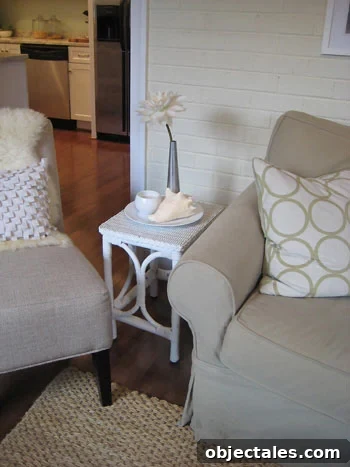
Enter our DIY pedestal table, the one we built ourselves. It’s the ideal scale for the larger furniture in the den and far more useful than the tiny wicker table it replaced. If you’re curious about the build, you might remember we shared details about its construction before. The height and surface area make it practical for both decorative display and everyday use.
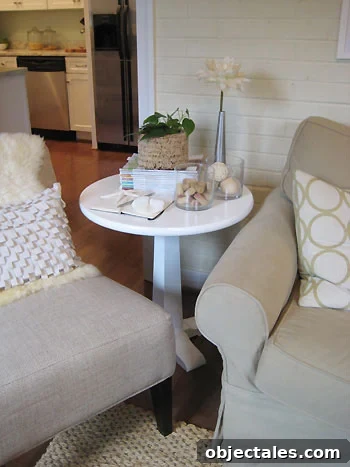
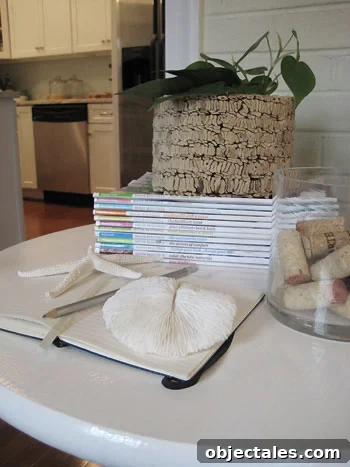
The table sits near a wide pass-through to the kitchen, so its back is often visible as much as its front. That was important to us: we wanted it to look good from every angle. A simple white finish keeps it clean and bright, and the new top from the hardware store ties in nicely with other finishes in the room.
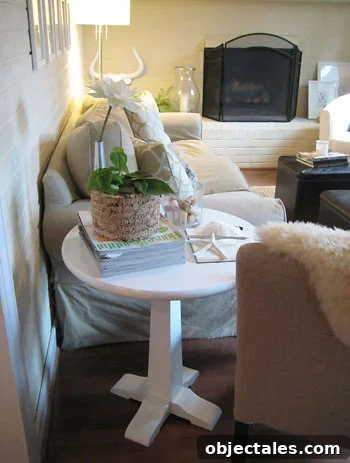
While we’re talking about the new side table, we thought this was a good opportunity to share some straightforward tablescape tips. We’ve had a few requests for guidance on arranging objects so they look intentional and uncluttered, so here are practical principles we use whenever we style a small surface.
Use graduated heights. Group objects at varying levels so your eye moves naturally through the arrangement. We often follow a “spiral” or stairstep approach: the tallest piece anchors the composition, followed by medium elements and finally low-profile items. This keeps the arrangement visually interesting without creating a jarring height contrast.
Choose items that share a common thread. Pick objects that relate in material, color, texture or shape. In our vignette, a natural-fiber planter, cork-textured accents and woven decorative balls create a cohesive, organic feel. The white flower, the nautical decorative pieces and the glossy table surface echo each other and reinforce harmony. This same idea works if you prefer a monochrome collection of ceramics or a curated set of colorful glass pieces—the key is a unifying element.
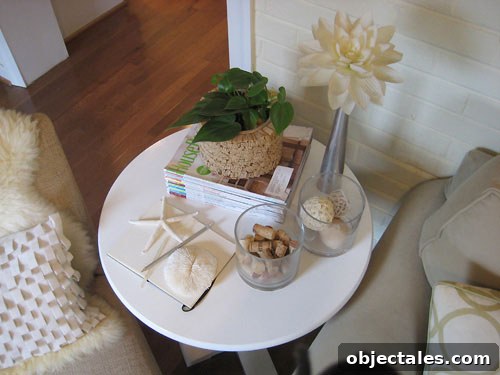
Edit ruthlessly. Part of creating a calm, stylish tablescape is restraint. Though the surface could hold more magazines, books, remotes or candles, we limit the display to a few favorite pieces. That lets individual items stand out and leaves room for practical uses—like setting down a drink. Less really can be more.
Favor odd numbers. An odd number of elements—three or five, for example—tends to create a more dynamic, balanced grouping than an even number. Odd groupings feel more natural and visually compelling, especially when items step down in height and share a common theme. Look at our table and you’ll notice it’s composed of five distinct parts, which makes the overall arrangement feel lively and complete.
Those are the basics we rely on when styling small surfaces: varied heights, visual connections between objects, careful editing, and odd-number groupings. With these simple guidelines you can make everyday surfaces look fresh and purposeful without buying new decor. We’d love to hear your tips too—what methods do you use to create appealing arrangements from the items you already have?
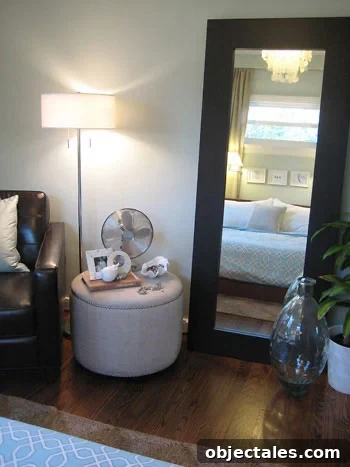
And of course we can’t resist one last look at the bedroom ottoman that kicked off this little furniture shuffle. Thanks, little guy—you inspired a useful change that made the den feel a little more finished.
For more accessory arrangement ideas, explore related articles from trusted home decor sources for additional inspiration.
[ad_2]