[ad_1]
Some window locations just aren’t ideal for full-length curtain panels. When a curtain can’t reach the floor or would interfere with radiators, furniture, or tight corners, hanging a partial-length panel often looks awkward. While café curtains can work in a few spots, most of the time we choose between full-length drapes that run from near the ceiling to the floor, or we skip traditional curtains in that area and select a different treatment instead.
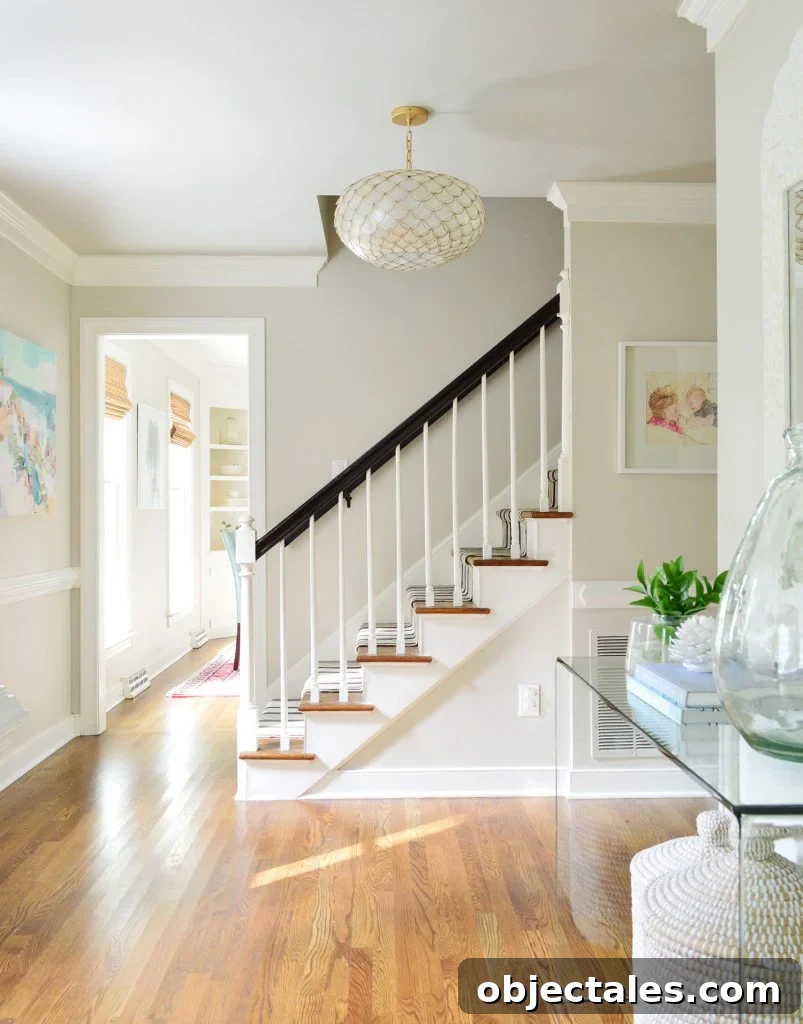
Take our dining room as an example: there are two heat registers positioned exactly where curtains would normally fall, and one window sits very close to a corner, which would force a panel to cover much of the glass rather than stack neatly to the side. Because of that, we opted not to use curtain panels in that spot and installed woven shades instead. The choice keeps the room feeling intentional without creating awkward fabric bunching or blocking vents, and the shades coordinate with other rooms on the first floor so the overall flow of the house remains cohesive.
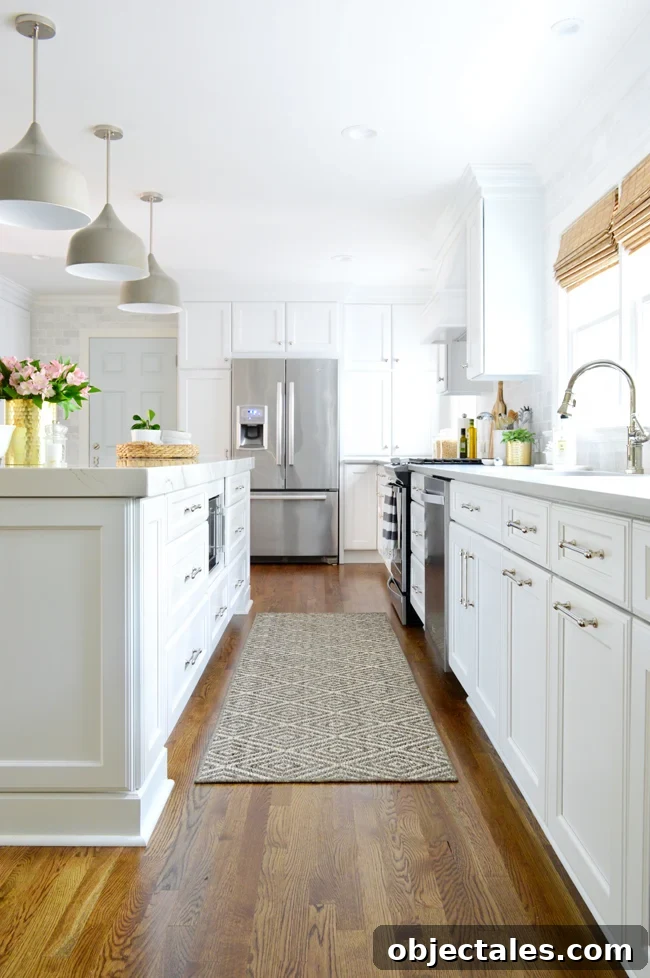
We used the same woven shades in the kitchen where long curtains would have hit the counter. In that space the shades introduce warm texture and softness without obstructing surfaces or appliances. Because the material is consistent with the rest of the main floor, the kitchen, dining room, and adjacent areas read as a connected, thoughtfully designed whole.
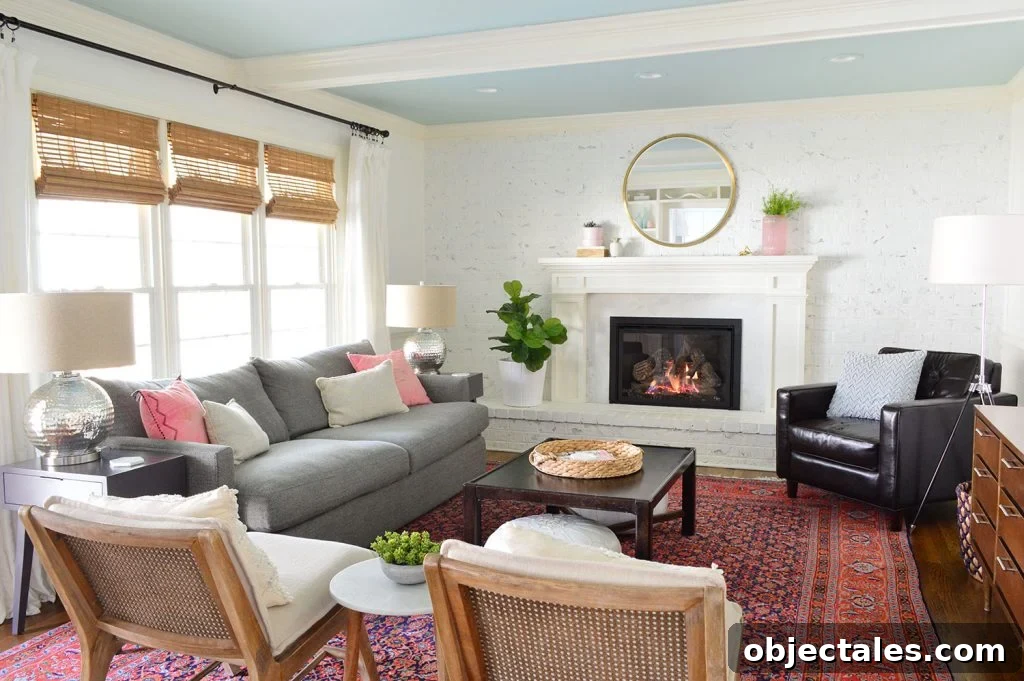
In the living room we were able to install long curtains, and we love the soft, layered feel they provide. In that space we paired curtains with the same woven shades so the window treatments have continuity across rooms, whether a room uses shades only or shades plus curtains.
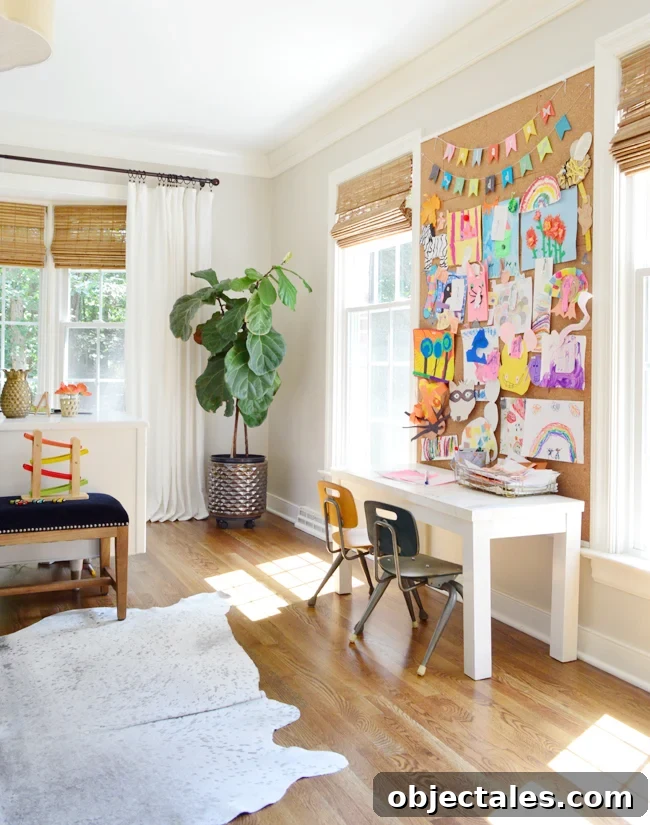
Our home office demonstrates that you don’t have to treat every window in a room the same way. The bay window in that room had enough clearance for curtains, while the front windows along the right wall did not—those front windows are close to a cork board and have heat registers on both sides. Hanging wide curtain panels there would have covered functional wall space and blocked vents, so we left the front windows without panels and only dressed the bay window. The result still looks balanced: the bay window becomes the focal point while the front windows play a supporting role.
Keep in mind that woven shades aren’t always about privacy or full light blocking. In our case, the property is set back from neighboring houses, so privacy needs are minimal on the main floor. If you need more privacy or better light control, choose lined woven shades or a lined Roman shade, or layer interior-mounted faux wood blinds inside the window frame. Layering blinds and shades with curtains is a helpful approach when you want a combination of texture, privacy, and light control—plus it looks polished and intentional.
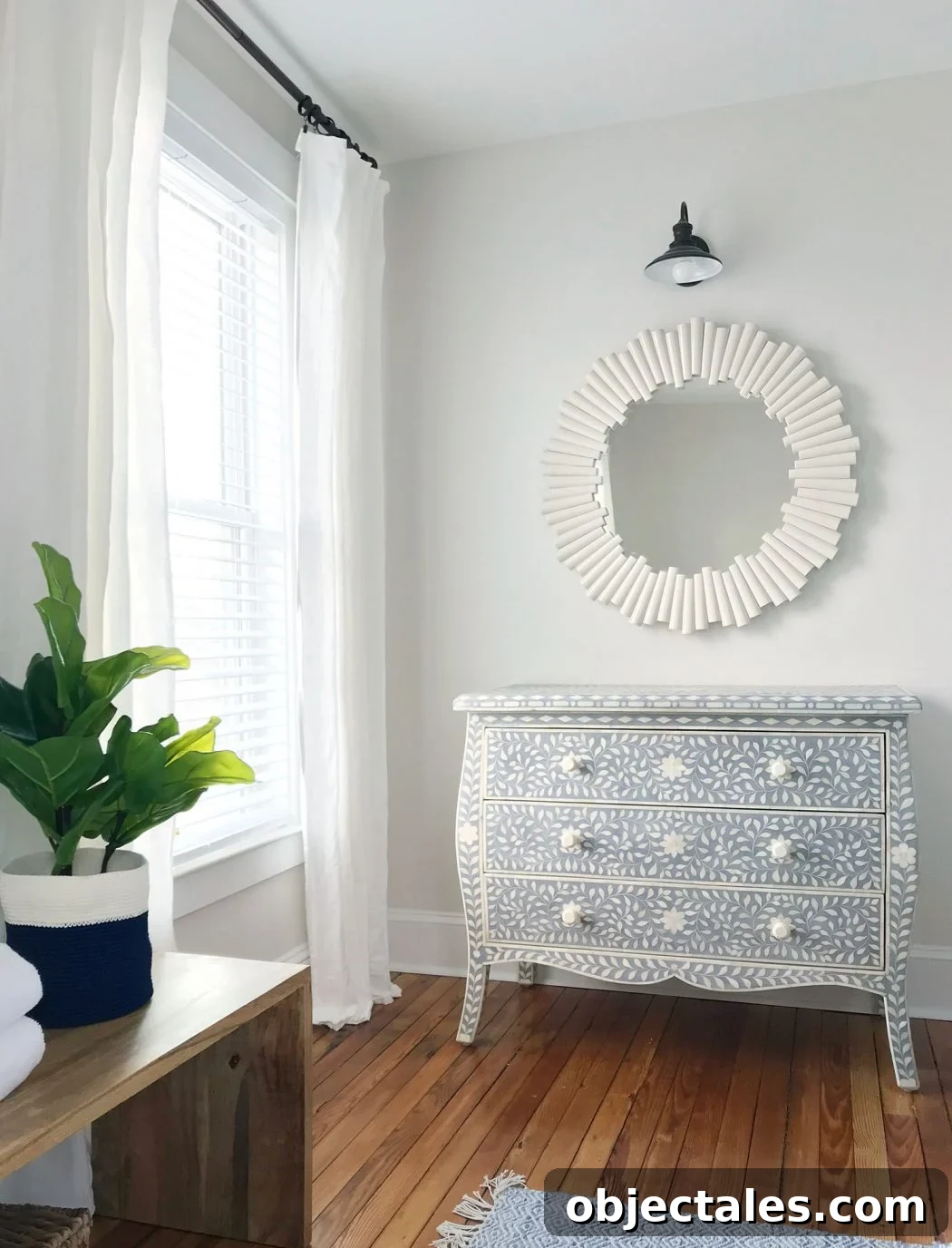
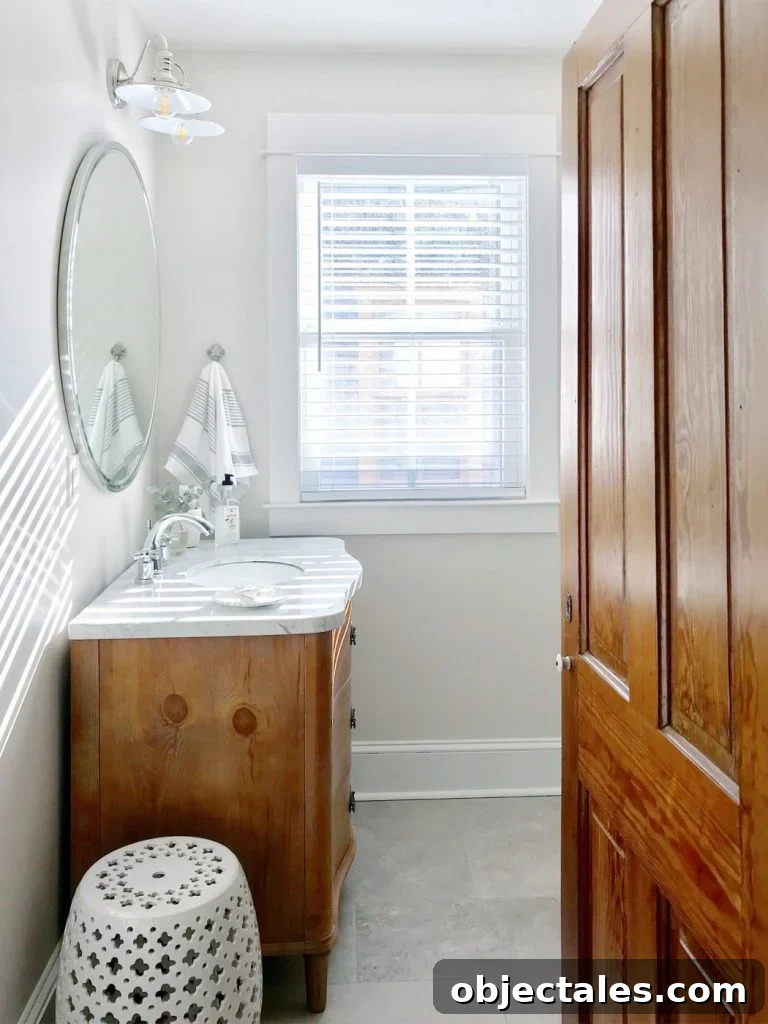
Faux wood blinds also work well on their own in bathrooms or bedrooms where privacy is essential. They provide a clean, simple backdrop and pair nicely with curtains when you want extra softness and insulation. They’re a practical option that can be used alone or combined with other window treatments depending on each room’s function.
Final thought: general rules for curtain height and hanging can be helpful, but the best solution depends on the specific layout and constraints of each window. Before committing, try holding different options up to the window, step back, and evaluate from across the room. You can test different heights, envision how a shade or a curtain would look in place, or even sketch directly onto a printed photo to explore ideas. For spots where curtains feel wrong, consider woven blinds or a patterned Roman shade—sometimes the simplest, most practical solution creates the most appealing result.
*This post contains affiliate links*
[ad_2]