[ad_1]
It’s Tuesday the 10th, which means it’s time to share this season’s unofficial Pinterest Challenge (not sponsored by Pinterest or anyone else). This friendly challenge, dreamed up to inspire people to stop pinning and start creating, has me excited to show what I made.
I decided to try painting again, partly because I wanted a fun creative night and partly because I hadn’t done much beyond walls, accessories, and furniture in years. Aside from one painting I did previously, I hadn’t picked up brushes for a while. These small experiments won’t land me a gallery show, but they were a lot of fun, and I’ve found places for them around the house. I especially enjoyed spending a couple of evenings using Christmas art supplies that had been unused in my closet for months. Painting felt like pure enjoyment, and I hope I keep going.
Following the challenge rules, I took inspiration from several projects I’d pinned and then gave each one my own spin. Some of the pieces that inspired me included geometric fabric patterns, a carefree children’s painting style, a DIY stamp project made with household items, a commissioned artist’s pieces used as a muse, another DIY challenge project, and a watercolor-card technique with charming, imperfect strokes.
Other artists and tutorials I admire also encouraged me—artists whose loose abstract work and bright palettes made me want to pick up a brush. With that inspiration, here’s how my painting session went.
My first session began after my daughter went to bed. I pulled out a small set of acrylics and inexpensive canvases I’d bought with a gift card. About twenty minutes later I had a small, colorful piece that surprised me. I focused on color relationships—red and coral with green, yellow, and blue—and deliberately avoided overthinking the brushstrokes. I dabbed and layered paint, sometimes dragging the brush to blend and other times leaving textured dabs. The result felt bright and fresh, and I immediately wished the piece were larger. Still, starting small made the process less intimidating.
The second painting didn’t resonate with me as strongly as the first. I realized I’d rushed the color decisions; painting is a process that benefits from patience. That canvas was tiny—only 4 x 6 inches—so it felt like a low-stakes exercise in learning to slow down.
Next I moved to a chunkier 5 x 5-inch canvas and worked even looser. For that piece I stuck mostly to a dabbed technique, yielding a result that reminded me a bit of water lilies. Coral streaks and pops of turquoise lifted the composition. Again, the color choices made a big difference in how successful the piece felt.
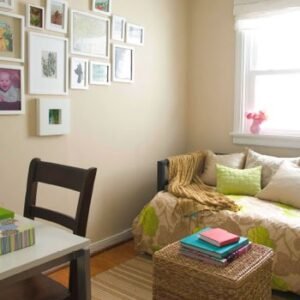
After everything dried overnight, I considered where to hang the new work. A hallway gallery wall seemed ideal because we enjoy rotating pieces there. Two small canvas-wrapped boards fit into existing frames in the top left corner of that wall, and the thicker 5 x 5-inch canvas found a place on another frame wall. Removing glass from one frame helped the canvas sit better, while another fit neatly behind the glass. Small tweaks like these helped the paintings integrate with our decor.
I then experimented on two larger canvas boards, documenting several stages of each piece. The early stages often looked messy and unfinished, and I had to learn when to stop adding paint. In some cases I liked an earlier version better than the final one, which taught me a valuable lesson: take breaks and evaluate whether new additions truly improve a piece. In the end I was happy with the finished canvases—the neon green-yellow tones give them a modern, cheerful feel, and the inexpensive boards make it easy to paint over them if I want a fresh start.
To make the canvases look more finished, my partner and I built two chunky wood frames from scrap materials. We originally planned to hang them in the office, but they worked best in the kitchen, where they add a bright, informal touch. One canvas now hangs above the stove; to protect it from splatters, I slipped a small piece of acrylic in front of it so it’s wipeable and practical in a cooking area.
Here’s a quick budget summary of the project:
- $11 – five canvases and a brush
- $16 – set of 24 acrylic paints
- $0 – two homemade frames made from scrap wood
- $0 – two already-owned frames used for smaller canvases
- $3 – acrylic sheet to protect the canvas above the stove
- Total: $30 for five painted canvases (about $6 per piece)
If you count the paint and brushes as a gift purchased earlier, the out-of-pocket cost for this challenge was minimal. The inexpensive materials and repurposed frames made it easy and affordable to experiment.
If you’ve tackled a Pinterest Challenge project recently, we’d love to see it. You can add links to your blog posts or share photos in the comments or on a public photo-sharing gallery. It’s always inspiring to see others’ creative takes—whether small studies or bigger transformations.
[ad_2]