[ad_1]
Remember when we split four discontinued Ikea curtain panels down the middle to make eight for our living room? If you missed that project, here’s the original story. To refresh: we loved how those panels added height, texture, and pattern, but I always wondered if adding a layer of airy sheers would soften and complete the look.
Layering sheers behind patterned panels can give curtains more fullness and an airy, relaxed feel. For a while I kept an eye out for inexpensive sheers that might work, and one day at Ikea I found two ready-made 98″ panels for $9. It was such a deal I grabbed four packs with my living room windows and the sliding glass doors in mind. I didn’t keep the packaging, so I couldn’t note the exact name, and online I couldn’t find an exact match at that price point. They seemed lighter than the Vivan panels and not as gauzy as the Lill sheers. Update: we think they’re called Wilma.
First step: I washed the panels to pre-shrink them so later hemming would hold after future washes. Pre-washing is a simple curtain-care step that prevents surprises when fabric shrinks. Next, I dug out the ring clips I’d used before — the same kind I used to hang the original eight panels — and prepared to hang the new sheers on the same rod.
When the sheers came out of the dryer I trimmed the tab tops so I could clip them directly to the rod with ring clips. That tab-top detail might help if you’re trying to identify this style of curtain; if your panels have a rod pocket instead, they’re likely a different model.
I then hung the sheers on the same curtain rod as the patterned panels, overlapping them slightly so they flow together. To make the two layers move as one unit, I clipped some of the sheer fabric behind the patterned panel’s ring clips. For example, the two left-most clips on a patterned panel also hold the sheer behind them. This overlap eliminates gaps and ensures both layers extend when the curtains are pulled. We don’t actually open and close our curtains much, but the layered setup creates visual softness and height, which is especially important in a large room where too much empty space can feel cavernous.
I stalled on finishing the project for a while. Between other home projects and book deadlines I left the sheers unhemmed, and a few readers even noticed them in earlier posts like this one. Eventually I returned to the task and hemmed all the panels using heavy-duty iron-on hem tape — Heat N Bond from Michael’s. Hemming while the curtains were hanging on the rod made it easy to get the right length, and I cut off about a foot of excess fabric from each panel, leaving an extra inch to form a neat hem so they just graze the floor.
Hemming curtains on the rod with iron-on tape is a quick method that avoids sewing while still producing clean results. After applying the hem tape I pressed the hems with an iron and trimmed any remaining fringe, resulting in curtains that hang evenly and look tailored. The sheers now add a breezy, layered dimension to the room without overwhelming the patterned panels.
It’s subtle, but layering sheers behind patterned curtains can transform a space. The double row of ring clips gives the treatment a slightly elevated, intentional look, and the extra softness helps the living room feel cozier. Small additions like this can make a large room feel less like a gymnasium and more like a comfortable, finished room.
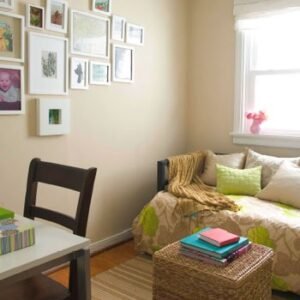
As for placement, the last two curtain panels hang on the sliding door off the living room, which keeps the entire window wall cohesive. And yes, Clara’s little homemade coloring desk continues to get a lot of use — she’s either cooking pretend meals at her play kitchen or going wild with stickers and crayons at her table. It’s a reminder that functional, kid-friendly spaces can still look thoughtfully styled.
In short: find affordable sheers, pre-wash and trim as needed, use ring clips to layer them behind existing panels, and finish with iron-on hem tape while the panels hang on the rod. The result is an easy, inexpensive curtain upgrade that adds lightness, depth, and softness to any room. What simple fabric updates have you been clipping, hemming, or sewing lately?
[ad_2]