[ad_1]
Sometimes one oversized junk drawer is harder to manage than two smaller ones that split the clutter. With that in mind, I decided to empty out our double-wide junk drawer — which had become increasingly unruly — and redistribute the contents into a pair of empty shallow drawers on the other side of the kitchen near the office. We’re fortunate to have more storage space than we need in this kitchen, and keeping these items closer to the office makes sense since we use most of them there but haven’t had a place to store them inside the office yet.
I laid the drawer on the floor and spread everything out so I could see it clearly, then sorted items into three piles: keep, store elsewhere, and donate/trash. Laying the drawer out like that makes it easy to evaluate what you actually use and to decide where each item should go.
Some practical tips from a casual organizer:
- If you haven’t used something in six months to a year, consider letting it go or storing it out of the way rather than giving it everyday drawer space.
- Group like items together so you can grab what you need in one place (for example: address book, stamps, and a return address stamp).
- Don’t keep excessive quantities of single-use items — you don’t need hundreds of pens or paper clips.
- Be honest about items you never use. I discovered an unused pad of Post-it notes that had moved with us and sat untouched for years.
- Corral small items such as clips, pins, and staples in divided boxes or containers so they aren’t loose and chaotic.
- Shallow, spread-out piles are easier to search through than a few deep piles where items get buried.
- Snacks help: a little treat keeps the momentum going during an organizing session.
Here are the empty drawers I used, located in the corner of the kitchen off the office. The top drawer now holds envelopes and stamps on the right, our green address book and return address stamp with tape and a stapler in the front, and a brown divided box filled with pens, pencils, scissors, paper clips, binder rings, wire, band-aids, and similar small supplies. That arrangement keeps frequently used items accessible and organized.
The second drawer contains batteries, rubber bands, safety pins, markers, crayons, heavy-duty 3M Velcro strips (handy for preventing picture frames from being pulled down), bank paper tubes for rolling change, and other odds and ends. Note: checkbooks were briefly stored here but have since been moved to a more secure location for privacy and safety.
Update: When it comes to babyproofing, we’re taking steps as needed. Clara doesn’t open kitchen drawers or cabinets yet and is always supervised in the kitchen. The moment she shows interest we’ll add proper childproofing and share an update as we make those changes.
The third drawer became a designated spot for cloth napkins, table runners, and paper napkins, making it simple to find tabletop supplies when setting the table.
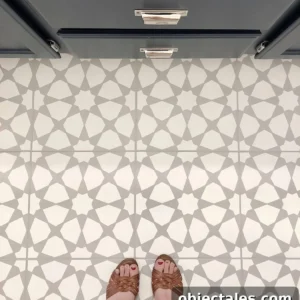
I even found a few nostalgic items at the bottom of the old junk drawer — a long-ago red ink stain from a floppy disk and an old soccer button featuring a young John. Small discoveries like that make a cleanup feel like a little time capsule moment. On a lighter note, I noticed my feet appeared in a third of the photos I took — apparently my feet are a new photographic accessory.
My takeaways from this quick project were threefold. First, organizing often seems more daunting than it really is — this whole transfer took less than thirty minutes once I committed to it. Second, spending those minutes now can save time later: keeping drawers organized makes everyday items easier to find and can recapture hours over the course of months. Third, there’s a real satisfaction in waking up to a freshly organized space; small wins like that brighten the day.
What small organizing tasks are you tackling lately? A little drawer refresh can make a surprising difference. If nothing else, you might even uncover a relic or two from the past and enjoy a short walk down memory lane.
[ad_2]